Our Community
Meet the thriving community, and partners who make our innovation ecosystem run and succeed.
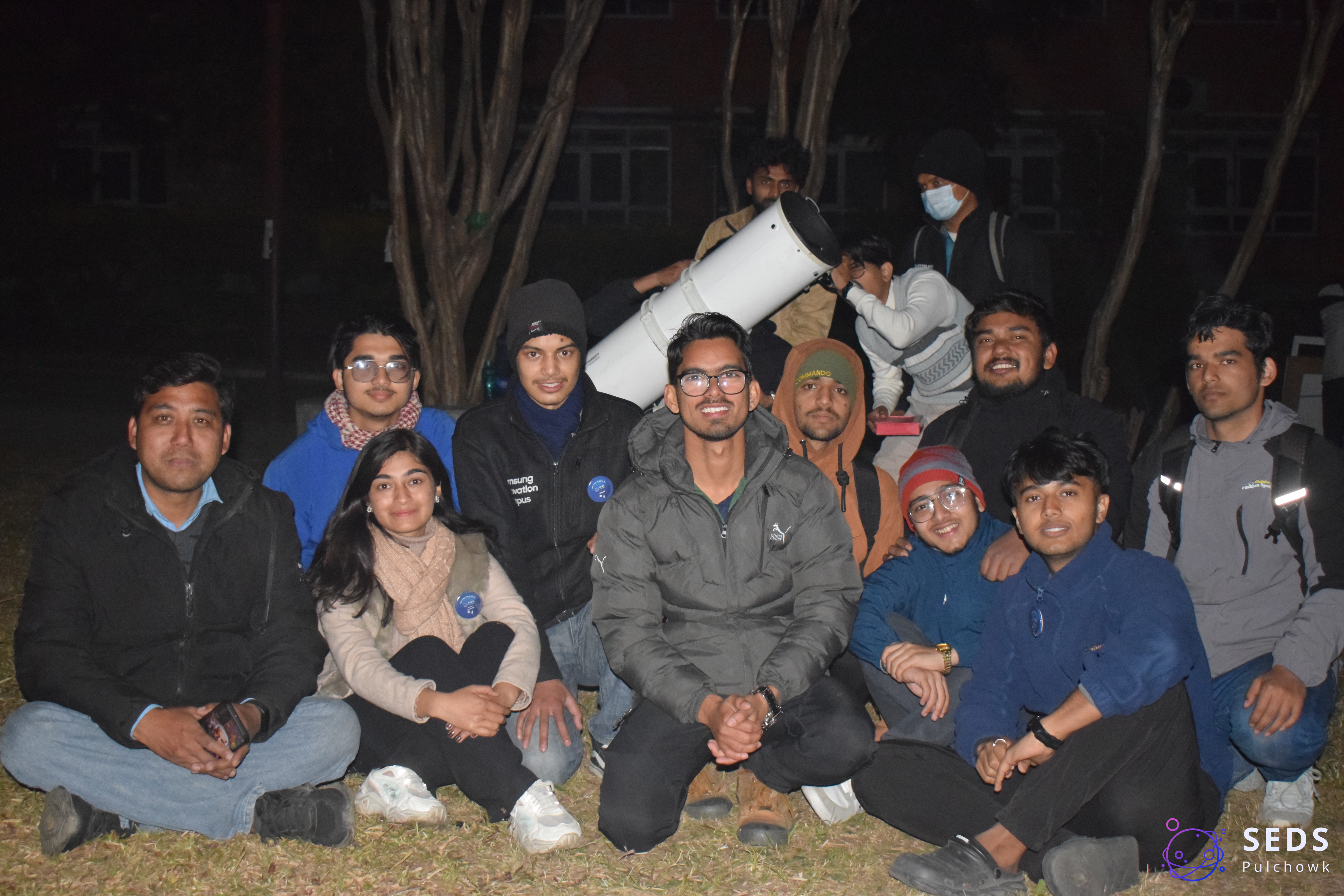
SEDS Pulchowk
Established in 2019, SEDS (Student for Exploration and Development of Space) Pulchowk serves as a pioneer in space exploration and innovation in Nepal. As a leading partner of SEDS Nepal, it is dedicated to advancing space technology through cutting-edge research, impactful outreach, and collaborative projects.
Projects
SEDS Earth Information
SEDS Earth Information Project leverages satellite data to monitor and analyze environmental changes on Earth. By utilizing advanced imagery and remote sensing, it provides insights into climate change, deforestation, and natural disasters. The project supports sustainable development through data-driven solutions for resource management and conservation, while also enhancing disaster preparedness and response. Ultimately, it aims to foster a more informed and resilient global community.
Cansat Launching and Testing
SEDS team successfully conducted a CanSat launch as a demonstration of the entire CanSat deployment and operation process. The launch took place from the top of the ICTC building on the final day of the LOCUS event showcasing the practical implementation of Cansat and it's operation. This hands-on event showcased the capabilities of our CanSat, from its design and testing to its real-time data collection during flight.
Germination & Comparison of Space-Flown Holy Basil Seeds
With implementation of Aurdino Uno Rev3 as experiment model, this project investigated the effects of spaceflight on the germination and growth of holy basil seeds as participant of AHiS call for projects. By comparing the performance of seeds that have orbited in space with those that remained on Earth, the study aims to uncover how space conditions such as microgravity and radiation affect seed development and plant growth. The findings provided valuable insights into space agriculture and the potential for growing crops in future space missions.
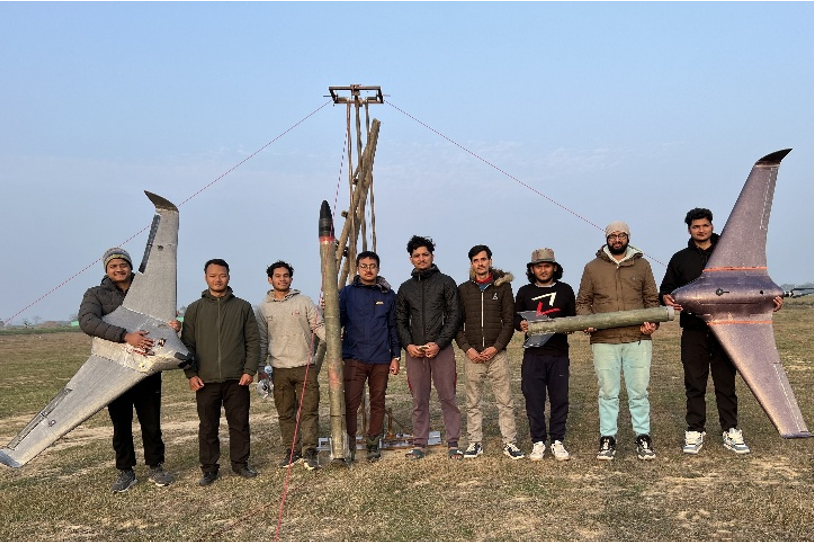
SRB
Team SRB (Solid Rocket Buster) is a dynamic group of passionate aerospace engineering students from Pulchowk Campus. Our mission is to design, build, and test rockets, pushing the boundaries of student innovation and technical expertise.
Teams
- Structural Team: Ensures the rocket's frame can withstand forces during flight and landing.
- Propulsion Team: Focuses on the design and testing of the solid rocket booster and its performance.
- Aerodynamics Team: Handles the rocket's shape, stability, and flight characteristics.
- Avionics Team: Designs and implements the electronic systems, including sensors and data acquisition.
Projects
Project Barbarika
Designed and developed as a final-year project by our seniors, was an impressive milestone in payload deployment technology. The rocket reached an altitude of 250 meters, showcasing its effective design and functionality. Its primary goal was to demonstrate a reliable payload deployment mechanism, which it achieved successfully.
Project Trishul
Project Trishul, a remarkable collaboration with WorldLink, achieved a historic milestone by reaching an apogee of 2.6 km, marking the highest altitude ever achieved by a student-level rocket in Nepal.
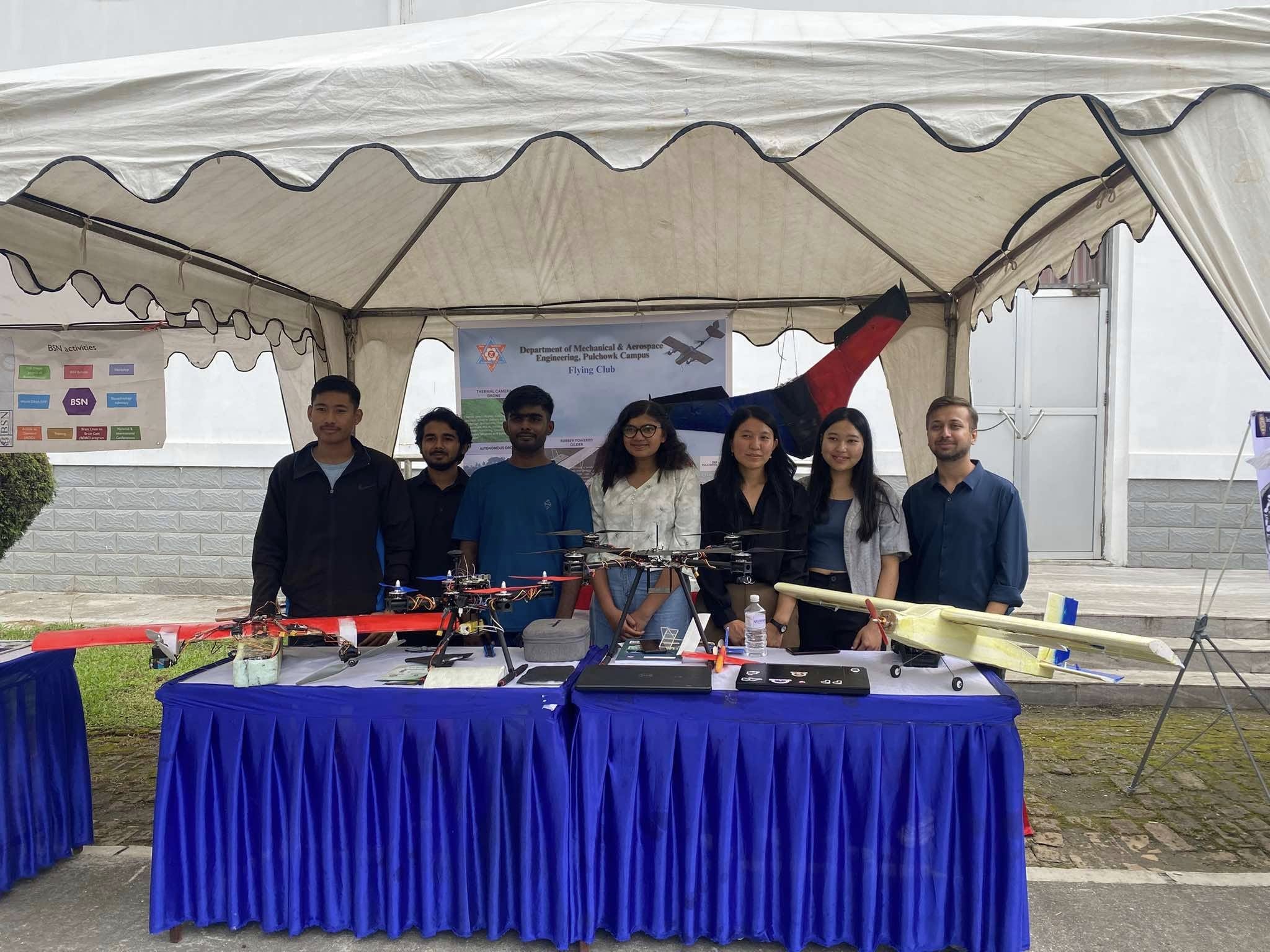
Flying Club
Flying Club Pulchowk is a vibrant community of aerospace enthusiasts dedicated to exploring UAV technology and aeromodelling through hands-on projects, competitions, and outreach initiatives.
Projects
RC Plane
It was first initiative involved designing, building, and successfully flying a radio-controlled aircraft. This foundational project introduced to the core principles of aerodynamics, propulsion, and flight control.
Autonomous Medical UAV
This project endeavors to develop a cost-effective and efficient Unmanned Aerial System (UAS) designed for transporting medical supplies to remote and challenging locations. The UAS, a fixed-wing aircraft, incorporates a parachute system to ensure the secure and safe delivery of medical cargo.
Aerial Mapping UAS
Developed an air pollution measurement system using an unmanned aerial vehicle, integrating calibrated particulate matter and environmental sensors, with successful flight testing demonstrating the feasibility of drone-based air quality monitoring to monitor PM2.5 and PM10 levels via drone-based mapping.
Tricopter Tilt Rotor VTOL
Designed and built a VTOL tricopter featuring tiltable rotors that enable seamless transition between vertical hovering and efficient forward flight. The aircraft combines rotary-wing maneuverability with fixed-wing efficiency, making it suitable for surveying, mapping, inspection tasks in challenging terrain, and experimental aerodynamics testing.
Rubber Powered Glider
Built simple rubber band-powered gliders for educational demonstrations and basic aerodynamic experiments. These lightweight aircraft store energy in twisted rubber bands and are excellent for understanding flight mechanics, lift, drag, weight balance, and promoting hands-on problem-solving through iterative design.
Join Our Community
Whether you're an entrepreneur, mentor, investor, or supporter of innovation, there's a place for you in our community.